Modern life has created a worldwide burden of both mental and physical dysregulation—and Musopathy exists to address that mind–body load in a structured, scalable way.
The Global Mind-Body Challenge
Across countries and age groups, people are facing rising levels of chronic stress, anxiety, depression, loneliness, hypertension, metabolic imbalance, musculoskeletal pain and sleep disturbance, often in the same individuals. More than one billion people worldwide are living with mental health conditions, and depression and anxiety alone are estimated to cost the global economy about 1 trillion US dollars every year in lost productivity. These issues frequently begin early in life: around 50% of lifetime mental illnesses start by age 14 and about 75% by the mid‑twenties, while 40–50% of young people report frequent loneliness and lonely students are several times more likely to experience severe psychological distress—factors strongly associated with later cardiovascular, metabolic and pain conditions as well as impaired quality of life.
Why Musopathy
Musopathy is an evidence‑informed, globally oriented framework that organises how structured sound, breath, rhythm, resonance, vibration, silence and listening can be applied to support health and wellbeing across mind and body. Instead of treating “mental” and “physical” problems as separate silos, Musopathy focuses on shared mechanisms such as autonomic balance, respiratory rhythms, vascular tone, pain processing, emotional regulation, attention and connectedness, and builds protocolised interventions that can be deployed at scale as adjuncts to standard care.
The Musopathy Triad, consisting of three complementary solution pillars of Tonation Breathing Techniques (TBT), Musopathy Aural Neural Engagement Techniques (MANET) and Receptive Musopathy are best placed to play vital roles in helping our species navigate through these troubling waters.
How Musopathy solutions can help
Because Musopathy interventions are modular and protocolised, its solutions can be tailored for stress, anxiety and mood; cardiovascular and metabolic health; pain and recovery; respiratory function and sleep; cognition and performance; and for addressing loneliness and disconnection through shared, participative formats. This allows individuals and organisations to integrate science‑guided sound and breathing practices into existing health systems, educational pathways, armed forces programmes and workplace initiatives.
In a world where stress‑related mental and physical conditions are driving enormous human and economic costs, Musopathy matters because it offers scientifically grounded, non‑drug, culturally adaptable and scalable ways to target underlying autonomic, respiratory, cognitive and social mechanisms rather than only symptoms.
Getting started with Musopathy
Studies to date suggest that Musopathy offers numerous evidence‑based health and wellness solutions. Many people begin by learning a few simple TBT techniques and participating in MANET sessions guided by trained Musopathists.
Short TBT instructional Videos help participants grasp and repeat the techniques. Some begin with foundational TBT practices such as Nasal Tonation and Buzz Tonation, while others start with condition‑specific guidance and then gradually expand into the wider TBT and Musopathy toolkit.
Musopathy as an antidote to Toxic Tonalities and Noise Pollution
Modern life exposes people not only to psychological and physiological stressors, but also to unhealthy sound environments and communication patterns that can amplify dysregulation. While there is substantial discourse and governmental legislation in most countries on Noise Pollution, there is an even larger entity which (not so) silently causes substantial long term harm to everyone – Toxic Tonalities (TT). This is scarcely a talking point socially or academically and Musopathists were the first to postulate that TT has the potential to cause acute or accumulated stress for millions of people across the world. Toxic Tonality may be defined as “a consciously or subconsciously grating tonal texture, both literally and figuratively.” TT include – but are not limited to sonic overload, unhealthy listening habits and forms of organised sound or expression that heighten agitation, distraction, emotional strain or physiological stress.
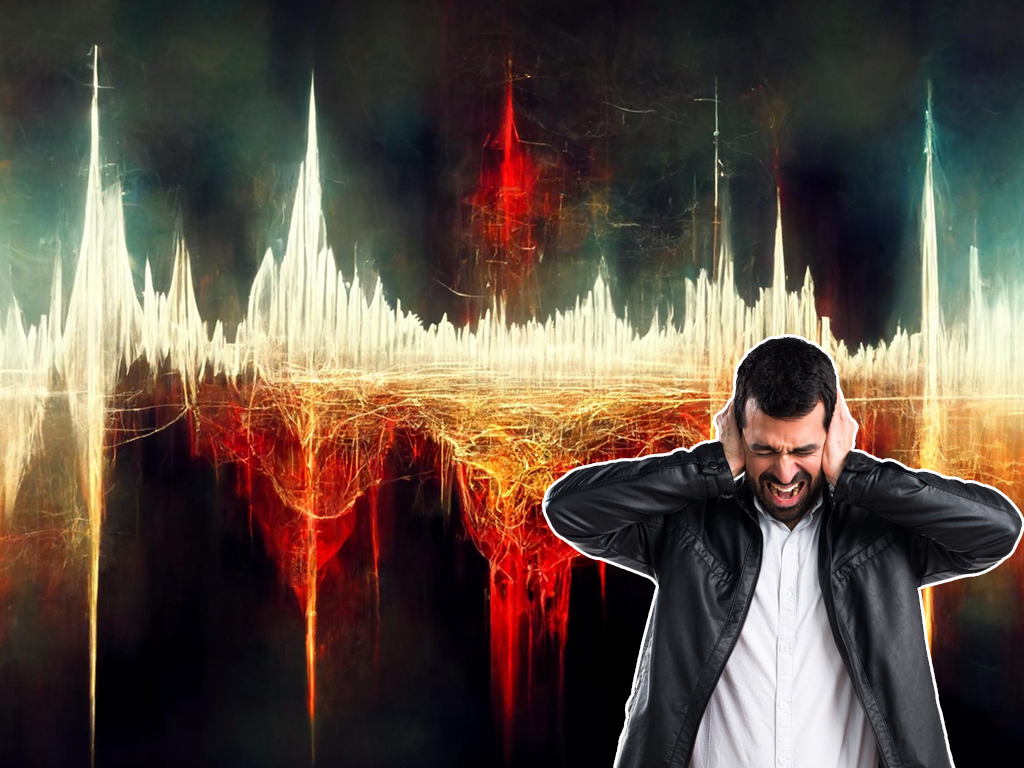
Toxic Tonalities can operate at several levels: literally, through volume, density and noise exposure; figuratively, through the emotional and behavioural tone of songs, speech and communication; and subconsciously, through repeated patterns that keep the nervous system in a heightened state. In this way, TT may contribute to stress, poor concentration, disturbed sleep, pain sensitisation, blood pressure elevation and other forms of mind – body strain.
(i) Literal Level: It is not only the loudness of what one hears but the textures of sounds that impact us. This includes noise that immediately affects us like a crashing metal or screeching wheels as well as thousands of ‘everyday sounds’ like fans running, air conditioners or refrigerators humming, vehicular traffic sounds including those made by our own cars on the road, doors closing or even some types of music. While the harmful effects of Noise Pollution are well known, Toxic Tonality is a different matter, focusing on the “tone” of the sounds we encounter daily, which we often overlook. Noise pollution certainly includes Toxic Tonalities, but it’s time to address the latter in a more specialized manner.
(ii) Figurative Level: Figuratively speaking, TT would include stress-trigger meetings and conversations that one may like to avoid but cannot, in professional, social or personal equations. These could at times even include people that one is close to. There could be instances where the very same people who were a source of “positive tonalities” to one at a particular time could seem to be the cause of TT at other times.
TTs were much less prior to the Industrial Revolution and are relatively lower in some countries and in certain regions within countries but maximum in urban settings. This is one of the reasons why millions of people are gravitating towards natural sounds such as ocean waves, falling rain etc on online platforms. But more precise Musopathy solutions can counter the impact of TT and improve the overall quality of life of everyone.
TT includes Noise Pollution and ‘Harmful’ Music
Noise Pollution (NP) specifically refers to excessive or harmful levels of sound that disrupt normal activities and negatively impact health or the environment. In short, TT encompasses NP but it is much more nuanced, sophisticated and wider in scope. Nevertheless, it is important to understand the general impact of volume levels on humans and other species. In broad terms, 40-50 dB is considered best and anything over 85 dB often proves to be dangerous for humans.
It is also being increasingly appreciated that Music itself has the power to be benevolent and also harmful. This can depend on a range of factors, chief of which are the theme of lyrics (promoting negativity, substance abuse etc), grating aural textures and excessive loudness (which can hurt aural neural pathways). Studies also show that certain types of music are intolerable even to animals and plants.
The Musopathy Nada Yoga Solution
Musopathy is probably the first program in the world to not only raise awareness about this issue but also offer solutions like TBT. In a manner of speaking Tonation is pursuit of self-generated purer tonalities. Musopathy techniques can counter the impact of these either by enabling those affected to listen to purer tonalities or learning to produce them by themselves. Nada Yoga (pronouced as naada yoga) is the pursuit of pure tonalities either through one’s voice or through an instrument. At least 10-15 minutes of TBT everyday can enable people to combat the impact of TT and also prevent further health complications.
Solutions embracing Tradition and Technology
Musopathy offers an antidote not by rejecting music or technology, but by cultivating healthier ways of breathing, listening, vocalising and interacting. Through practices such as TBT, MANET and related Musopathy approaches – including structured listening pathways linked to Nada Yoga – individuals and organisations can begin replacing dysregulating tonal environments with patterns that support regulation, resilience and wellbeing.
Disclaimer
Musopathy interventions are intended as complementary wellness and health‑supportive practices. They are not a substitute for medical diagnosis, treatment or emergency care, and participants are encouraged to continue working with qualified healthcare professionals while integrating Musopathy as an adjunct to conventional approaches.